
Can Cold Sores Start as Pimples? How to Tell the Difference
A small bump on your lip can be confusing. Can a cold sore start as a pimple?
Yes, an early cold sore can initially look like a small red or raised spot. However, cold sores usually progress into fluid-filled blisters, while ordinary pimples typically develop differently.
What Does a Cold Sore Look Like at First?
Before the blister appears, many people experience warning sensations such as:
- Tingling
- Burning
- Itching
- Stinging
- Mild numbness
- Sensitivity
These symptoms can occur a day or two before the visible blister develops.
The area may initially look like a small red bump, which is why a cold sore can sometimes be mistaken for a pimple.
Cold Sore vs. Pimple
The location and progression can provide useful clues.
| Cold Sore | Pimple |
|---|---|
| Often begins with tingling, burning or itching | Usually no warning sensation |
| Commonly appears on or around the lip | Can appear anywhere with hair follicles |
| Develops into fluid-filled blisters | Usually forms a solid or pus-filled bump |
| Often appears in a cluster | Usually appears individually |
| Can crust after breaking | May develop a whitehead |
| Caused by HSV | Usually associated with blocked/inflamed pores |
The NHS specifically lists a painful red spot filled with pus as more consistent with a spot or boil than a cold sore.
How Can You Tell If It’s a Cold Sore?
Pay attention to what happens next.
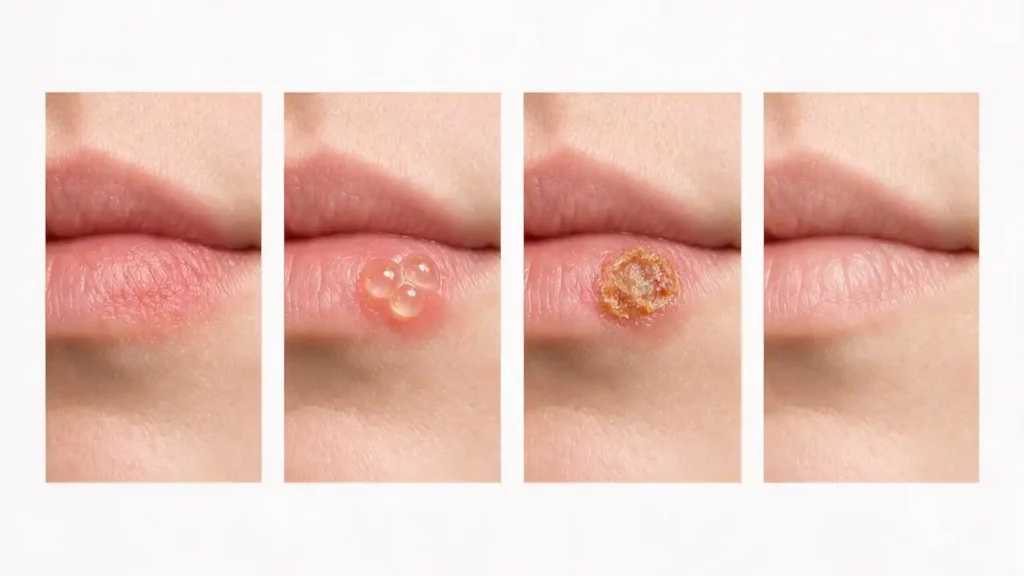
A cold sore commonly progresses from:
Tingling → Red spot → Small blisters → Fluid → Crusting → Healing
Cold sores are typically clusters of small, fluid-filled blisters around the lips or mouth.
A pimple generally develops as an inflamed bump and may eventually form a whitehead or contain pus.
However, appearance alone cannot always provide a definite diagnosis.
Can You Get a Cold Sore on Your Lip?
Yes. The lips and area around the mouth are among the most common locations for cold sores.
If you repeatedly develop a similar lesion in approximately the same location, especially after the same tingling sensation, that pattern may be consistent with recurrent cold sores.
What About a Canker Sore?
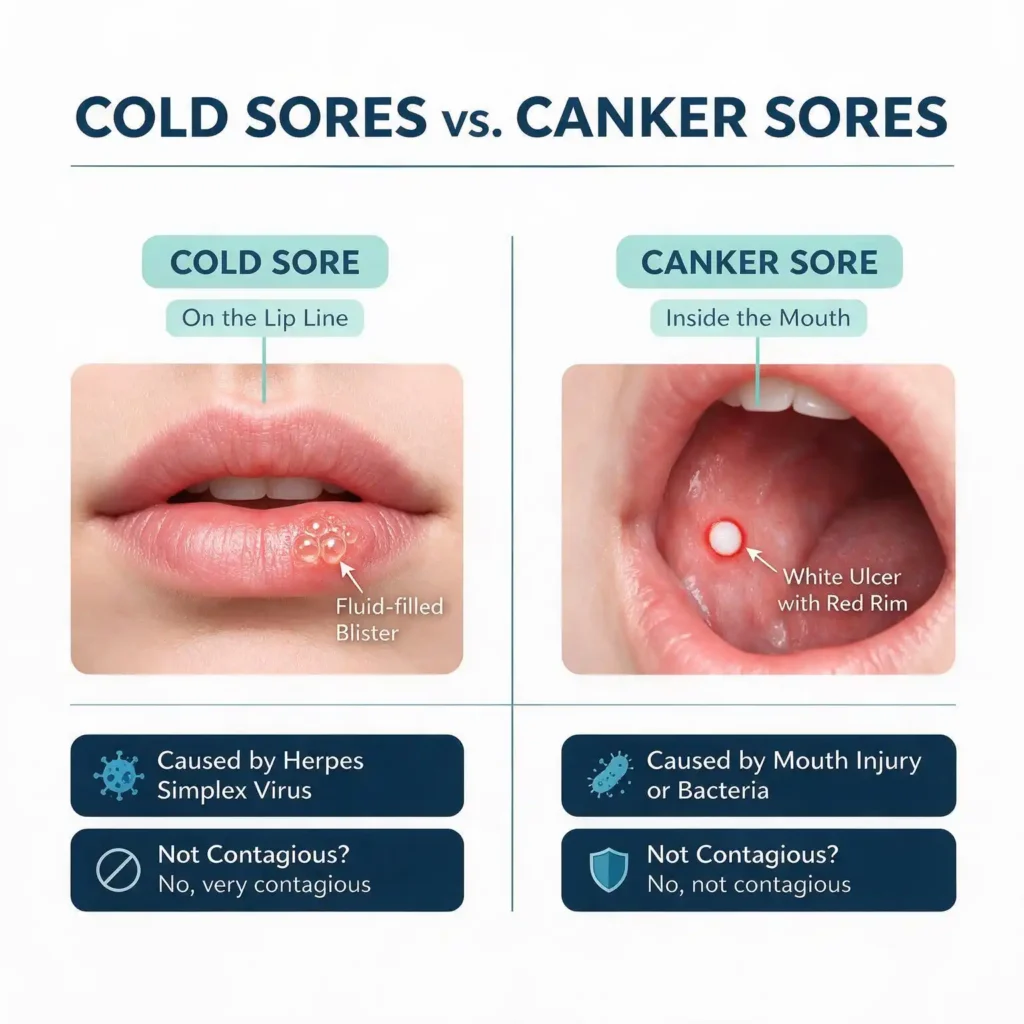
A canker sore is different.
Canker sores usually occur inside the mouth, such as inside the cheeks or lips, beneath the tongue, or around the gums. They aren’t caused by HSV and aren’t contagious.
Cold Sore vs. Canker Sore: What’s the Difference? →
What Should You Do If You Think It’s a Cold Sore?
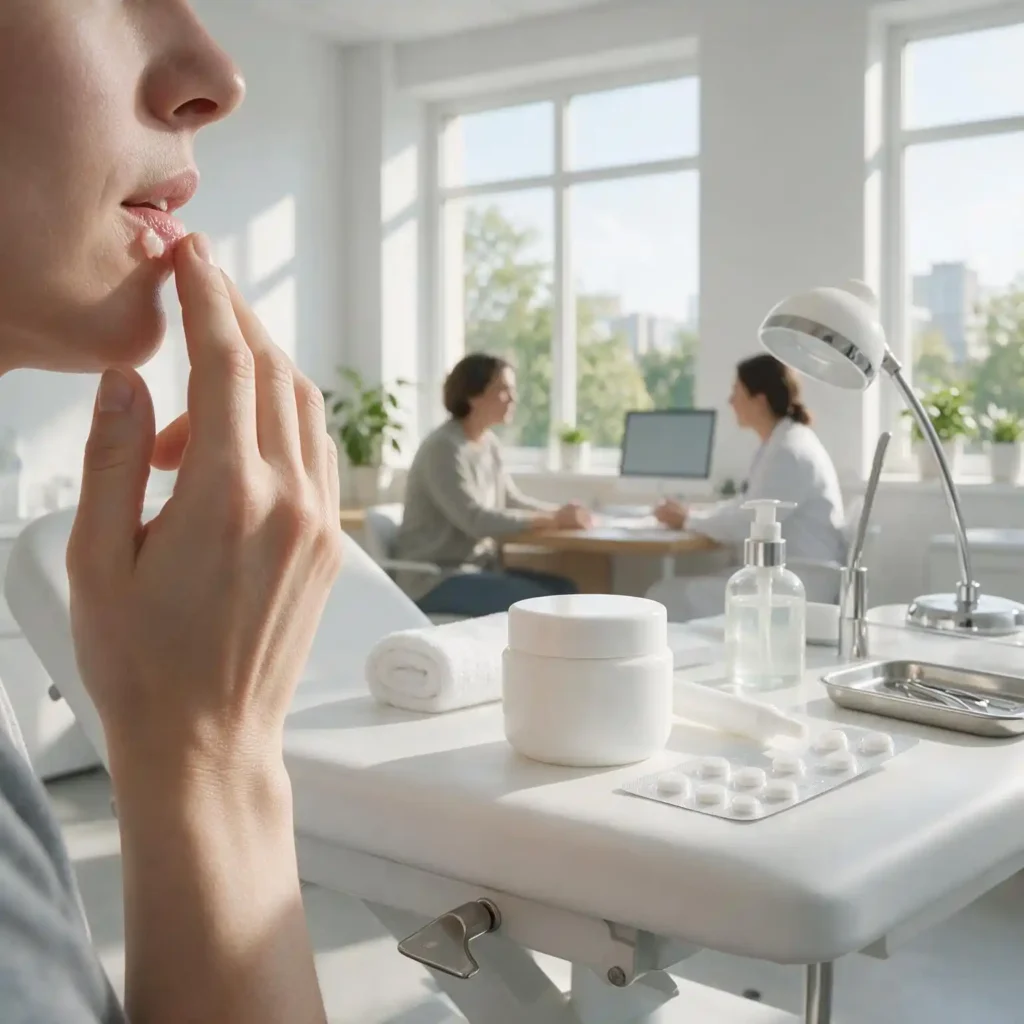
If you recognize the early tingling or burning that normally occurs before your cold sores, early treatment may be beneficial.
Some antiviral treatments work best when started at the first sign of symptoms.
Avoid squeezing or picking the area. If you touch or treat a cold sore, wash your hands afterward to reduce the risk of spreading the virus.
Recommended Cold Sore Products
PLACE YOUR AFFILIATE PRODUCT GRID HERE
Use your existing three categories:
Cold Sore Cream
Topical treatments may help manage symptoms, particularly when used early.
Cold Sore Patch
Can cover and protect the affected area while helping reduce irritation and unnecessary touching.
Cold Sore Treatment Gel
A topical option designed to help soothe and manage cold sore symptoms.
When Should You See a Doctor?
Consider medical advice if:
- The sore is unusually severe or painful.
- It doesn’t heal within about two weeks.
- You experience frequent outbreaks.
- A sore develops near your eye.
- You’re uncertain whether the lesion is a cold sore.
Bottom Line
A cold sore can initially resemble a small pimple, but it usually develops into fluid-filled blisters and is often preceded by tingling, burning, or itching.
If you’re unsure, don’t squeeze the bump. Watch how it develops and seek professional advice if you’re concerned.
Medical Disclaimer
This article provides general educational information and does not replace diagnosis or treatment from a qualified healthcare professional.