
Cold Sore vs. Canker Sore: What’s the Difference?
A sore around your mouth can be confusing. Is it a cold sore or a canker sore?
Although they can look similar, there are some important differences.
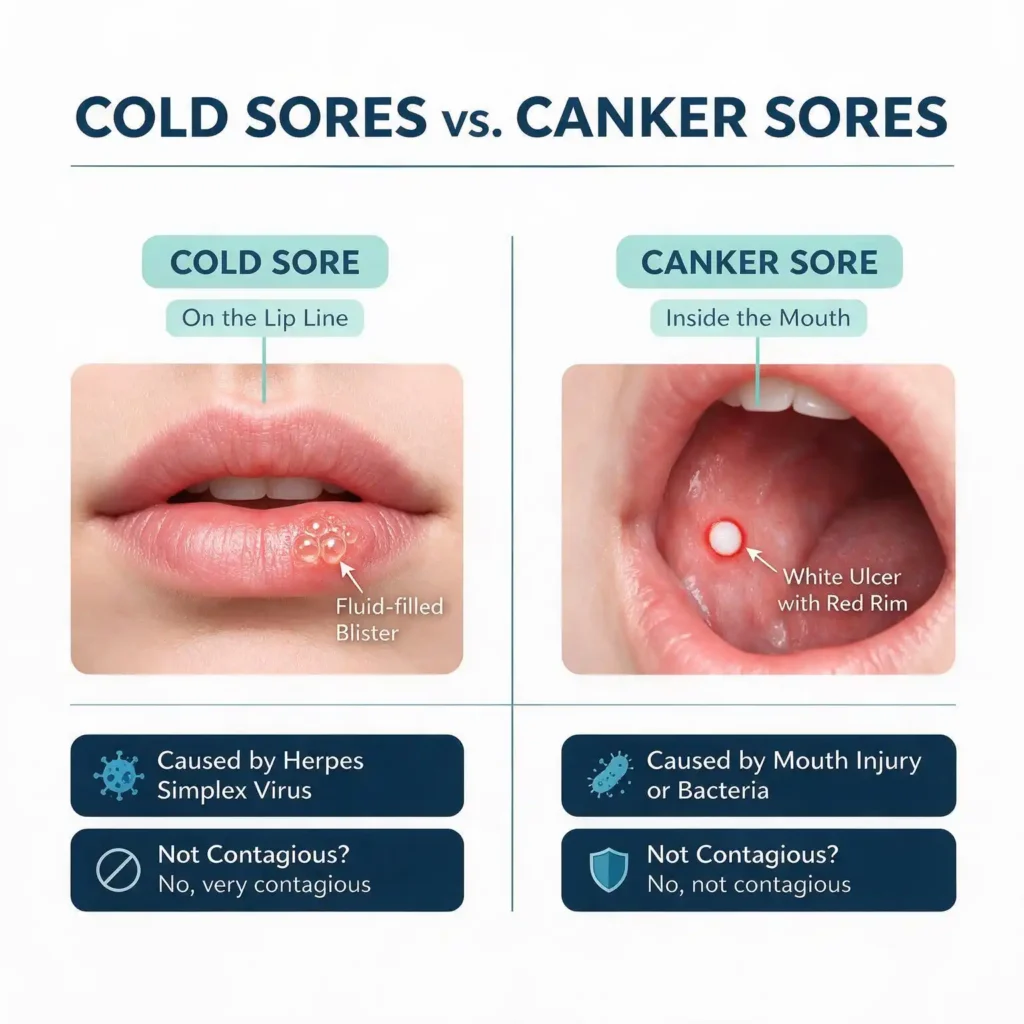
Cold Sore vs. Canker Sore
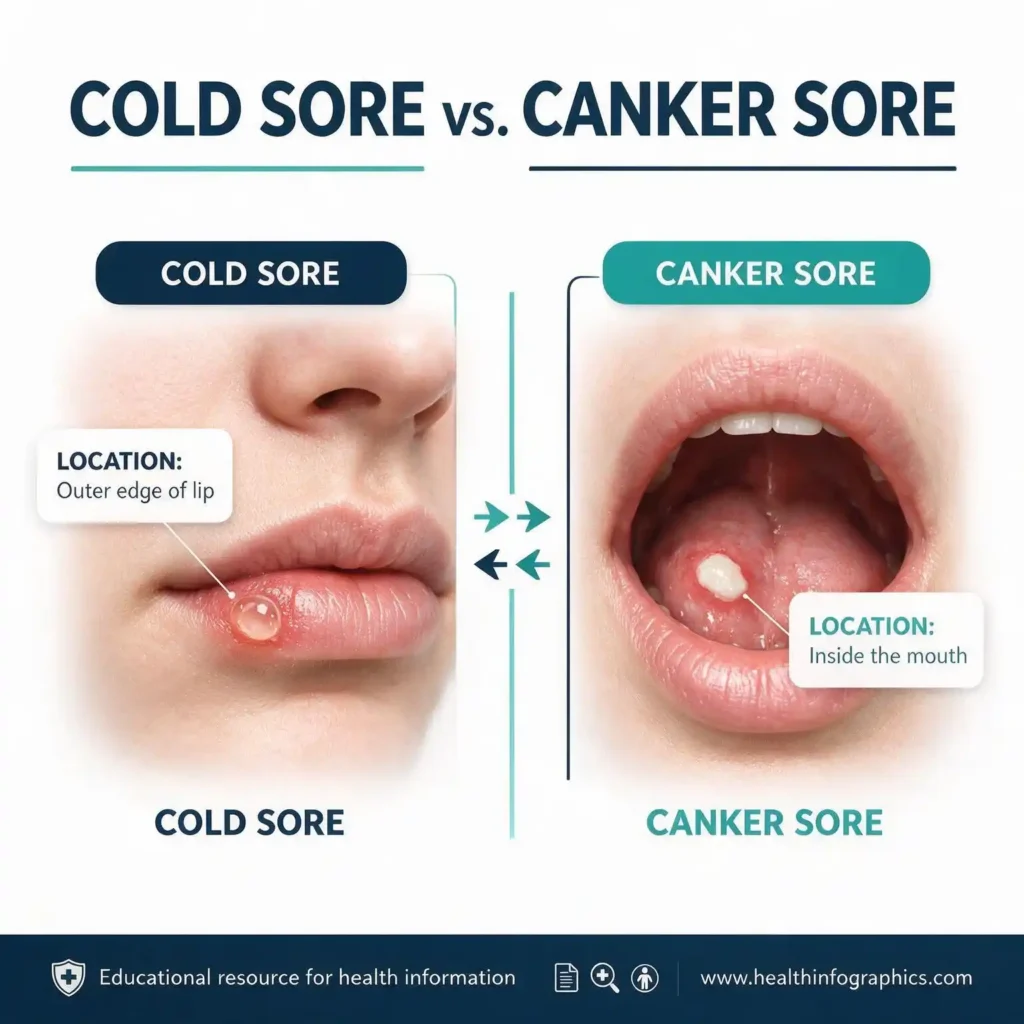
Cold sores are usually small, fluid-filled blisters that appear on or around the lips. They are commonly caused by herpes simplex virus (HSV-1) and are contagious.
Canker sores are usually shallow ulcers that develop inside the mouth, such as on the inside of the cheeks or lips, under the tongue, or around the gums. They are not caused by herpes and are not contagious.
| Cold Sore | Canker Sore |
|---|---|
| Usually on or around the lips | Usually inside the mouth |
| Often fluid-filled | Usually white/yellow center with red border |
| Caused by HSV | Not caused by herpes |
| Contagious | Not contagious |
| Often begins with tingling | May begin with burning or tingling |

Where Is the Sore?
Location is one of the easiest clues.
A blister appearing on the lip or around the mouth is more typical of a cold sore. A painful ulcer inside your mouth is more typical of a canker sore.
However, appearance alone cannot always determine the cause.
What Should You Do?
If you believe you have a cold sore, products such as cold sore creams and patches are commonly available for managing symptoms. Some antiviral treatments work best when started early.
Compare Cold Sore Products →
If you’re unsure what the sore is, especially if it is unusually large, painful, persistent, or keeps returning, speak with a doctor or dentist.
Medical Disclaimer
This article provides general educational information and does not replace professional medical advice.
Sources: Cleveland Clinic, Mayo Clinic and NHS.


