
Cold Sore Stages: What to Expect From Start to Healing
Cold sores usually develop through several recognizable stages. Knowing what each stage looks and feels like can help you understand what is happening and take appropriate precautions to reduce spreading the virus.
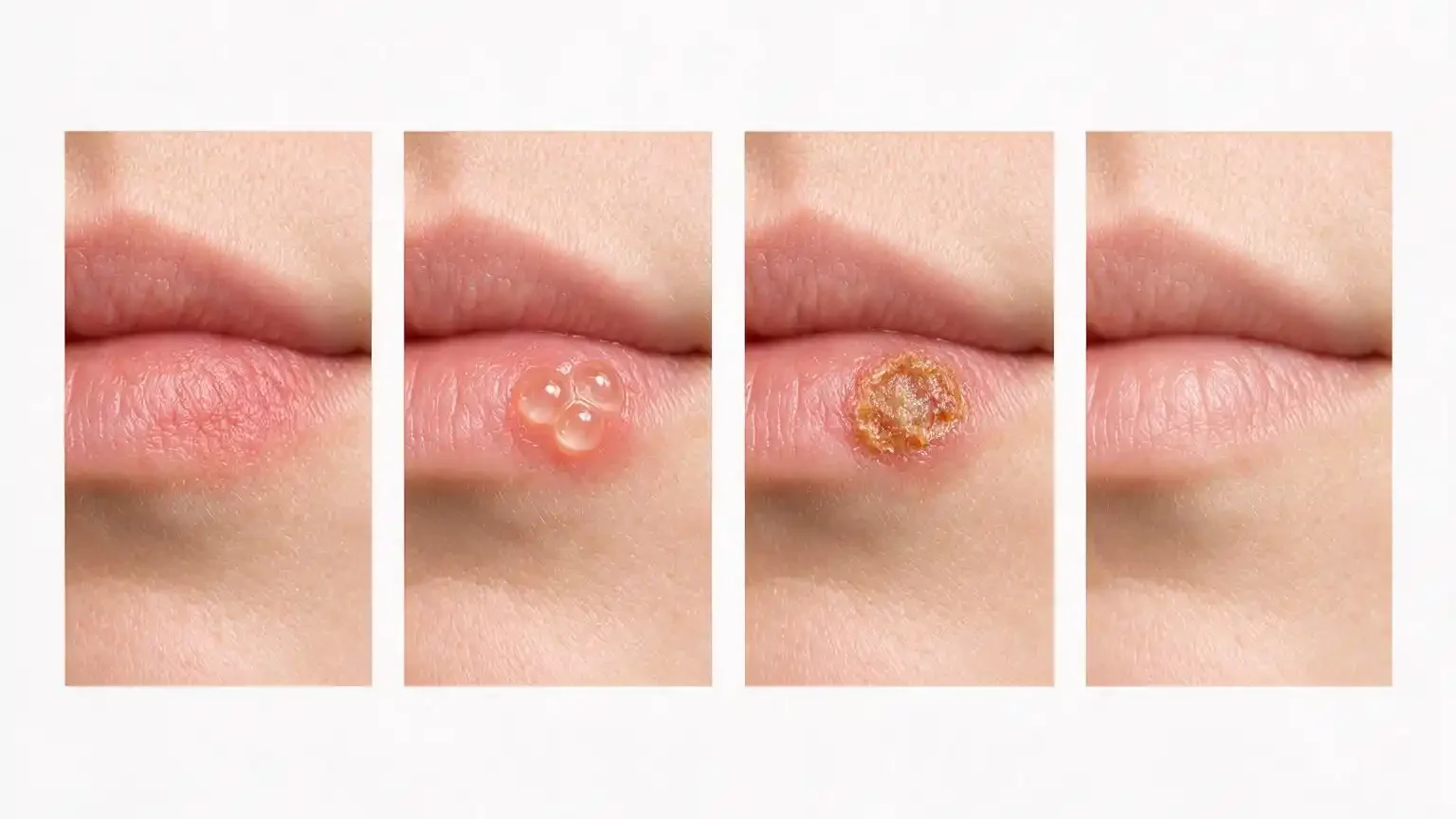
1. Tingling and Early Symptoms
The first stage often begins with tingling, itching, burning, or mild discomfort around the lips. The skin may become slightly red or sensitive before anything visible appears.
This early stage can occur hours or even a day before a blister develops.
2. Small Blisters Appear
Small, fluid-filled blisters may develop, commonly around the lips or mouth. Several tiny blisters can appear together and may become more noticeable over the next day or two.
The area can feel sore, irritated, or tender.
3. Blisters Break and Become an Open Sore
The blisters can rupture and release fluid, leaving a shallow, painful sore. This stage can be particularly uncomfortable when eating, drinking, or moving the lips.
Avoid touching the sore unnecessarily, as the virus can spread through contact.

4. Crusting and Scabbing
As the sore begins to heal, it usually dries out and forms a crust or scab. The area may feel tight, itchy, or uncomfortable.
Picking or removing the scab can delay healing and may cause additional irritation.
5. Healing
The scab gradually disappears and the skin underneath continues to recover. Mild redness or discoloration can remain temporarily after the cold sore has healed.
Most uncomplicated cold sores heal on their own within around 1–2 weeks.
When Are Cold Sores Contagious?
Cold sores are contagious from the early tingling stage until the sore has completely healed. The risk of transmission is generally highest when blisters are present and leaking fluid.
Avoid kissing, oral contact, and sharing items that touch the mouth during an outbreak.
How Can You Help a Cold Sore Heal?
Keeping the area clean and avoiding unnecessary touching can help prevent additional irritation. Some over-the-counter treatments may reduce symptoms or shorten an outbreak when used appropriately, particularly when started early.
If outbreaks are frequent, severe, unusually persistent, or affecting the eyes, speak with a healthcare professional.

Frequently Asked Questions
How long do cold sores usually last?
A typical cold sore takes around 1–2 weeks to heal, although the exact duration varies between people.
Can you stop a cold sore before it appears?
Starting treatment during the early tingling stage may help shorten or reduce the severity of an outbreak. Treatment effectiveness varies.
Are cold sores contagious before the blister appears?
Yes. Cold sores can be contagious during the early tingling stage, even before a visible blister develops.
Should you pop a cold sore?
It is generally better not to deliberately pop or pick a cold sore. Doing so can irritate the area and increase the chance of spreading the infection to other areas.
- Buy Abreva for Immediate Relief
- Buy Compeed Patches for Discretion
- Buy Luminance Red for Chronic Outbreaks


Medical note: This article is for general educational information and is not a substitute for professional medical advice.