
Are Cold Sores Filled With Pus? What the Fluid Really Means
If you’ve noticed yellowish or cloudy fluid coming from a cold sore, you may wonder: is it pus, or is that normal?
Usually, a cold sore is not filled with pus. Cold sores are fluid-filled blisters caused by the herpes simplex virus (HSV), and the fluid is typically clear or slightly yellow.

What Is Inside a Cold Sore?
Cold sores develop as small blisters containing fluid. As the outbreak progresses, the blister can rupture and release clear or slightly yellow fluid before drying and forming a crust.
Yellowish fluid alone does not necessarily mean the cold sore is infected.
What Does Pus Look Like?
Pus is generally thicker and may appear white, yellow, or green. It can occur when the body is responding to a bacterial infection.
If you notice thick pus together with increasing redness, swelling, warmth, or worsening pain, speak with a healthcare professional.
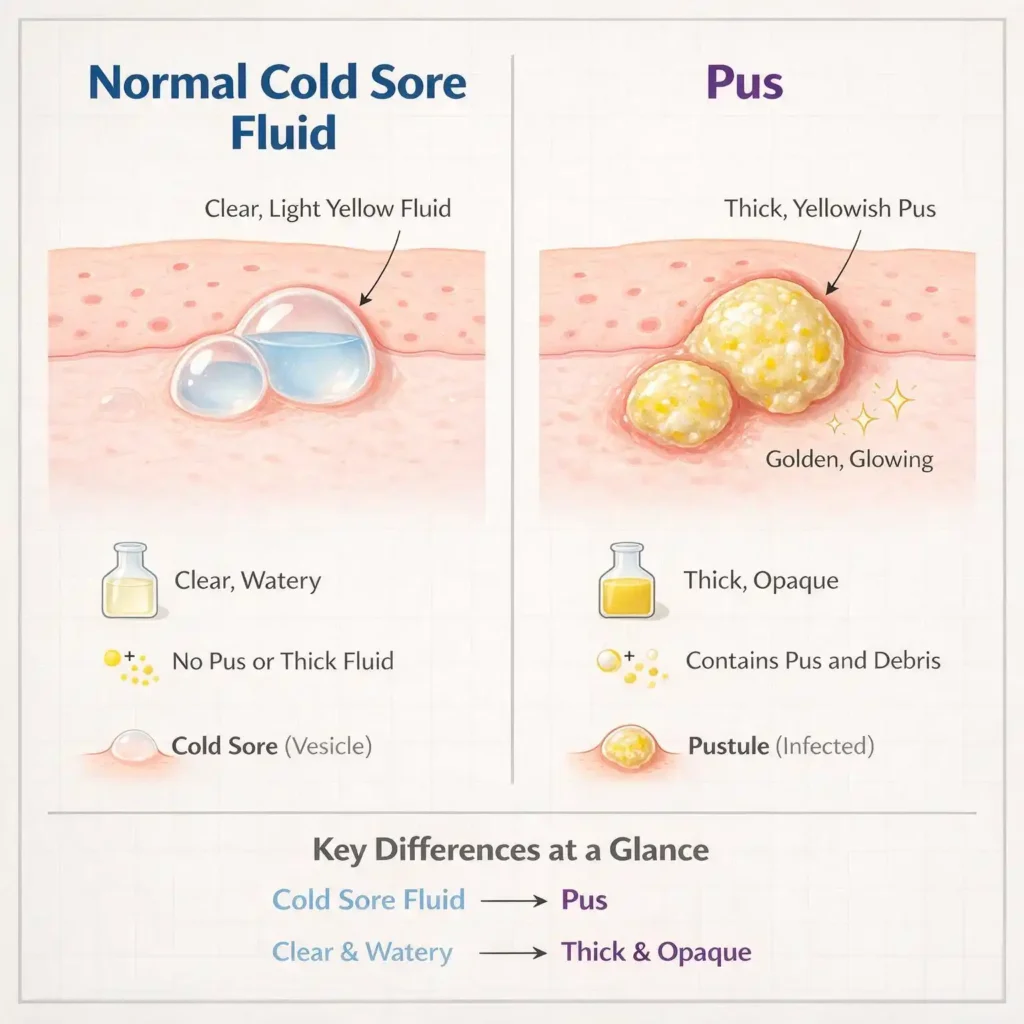
Cold Sore Fluid vs. Pus
| Cold Sore Fluid | Possible Pus |
|---|---|
| Usually clear or slightly yellow | Usually thicker |
| Normal part of blister development | May indicate infection |
| Followed by drying and crusting | May occur with increasing redness |
| Usually part of the healing process | May require medical assessment |
Should You Pop a Cold Sore?
No.
Squeezing, cutting, or popping a cold sore can irritate the area and potentially spread the virus. Avoid unnecessary touching and wash your hands after applying any treatment.
What If It Looks Like a Pimple?
Cold sores can sometimes be confused with pimples.
Cold sores typically develop as clusters of small, fluid-filled blisters around the lips. A pimple or boil may contain thicker pus.
If you’re unsure what you’re dealing with, avoid squeezing it and consider speaking with a healthcare professional.
Can Cold Sore Products Help?
Some antiviral treatments can help shorten an outbreak, particularly when started early. Other products can help protect the area or manage symptoms.
Recommended Cold Sore Products
PLACE YOUR AFFILIATE PRODUCT GRID HERE
Cold Sore Patch
Helps protect the affected area while reducing irritation and discomfort during an outbreak.
Cold Sore Cream
Topical creams may help manage cold sore symptoms, especially when used early.
Cold Sore Treatment Gel
A convenient topical option that may help soothe and manage cold sore symptoms.
CTA: Compare Cold Sore Products →
This should link to your dedicated Cold Sore Products comparison page containing your Amazon affiliate products.
When Should You See a Doctor?
Seek medical advice if:
- The sore is unusually large or painful.
- It isn’t starting to heal within about 10 days.
- The area becomes increasingly swollen, red, or painful.
- You notice obvious pus or signs of infection.
- You’re unsure whether it is actually a cold sore.
The Bottom Line
Cold sores normally contain clear or slightly yellow fluid, not pus. As they heal, they typically rupture, dry, and form a crust.
If the fluid becomes thick and pus-like or the surrounding area becomes increasingly painful, swollen, or red, seek medical advice.
Medical Disclaimer
This article provides general educational information and does not replace diagnosis or medical advice from a qualified healthcare professional.
Looking for a cold sore treatment? Compare patches, creams, and gels →